I used to be obsessed with shoes. (and my hubby looks in my closet & thinks I still am because I haven’t gotten rid of shoes that I can’t wear anymore.)
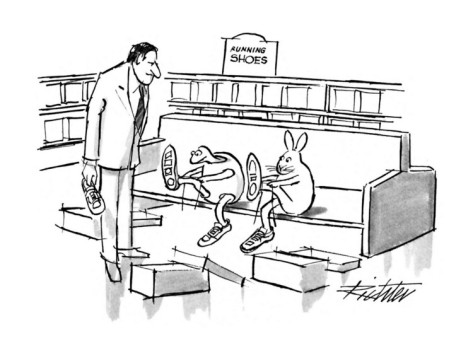
Now it’s Running Shoes.
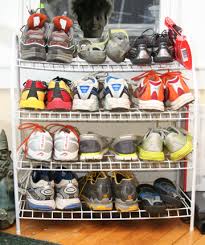
It’s not that I need to have every style or color. It’s just that I am trying to find the perfect running shoe. The one where my feet won’t hurt and will give me PRs (ha ha!)
I started with Sauconys and then came back to them.

Then it was Nike.
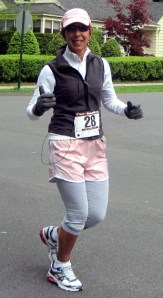
And then Asics a few times.

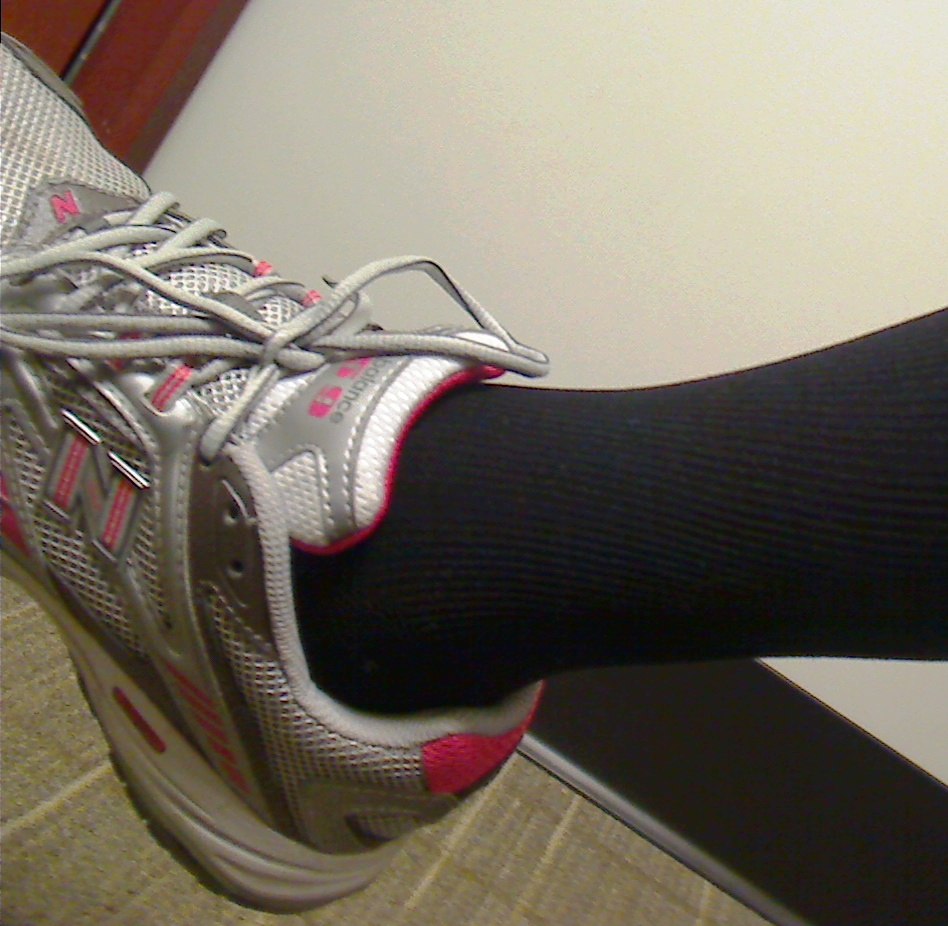
Briefly after my injury, I wore New Balance.

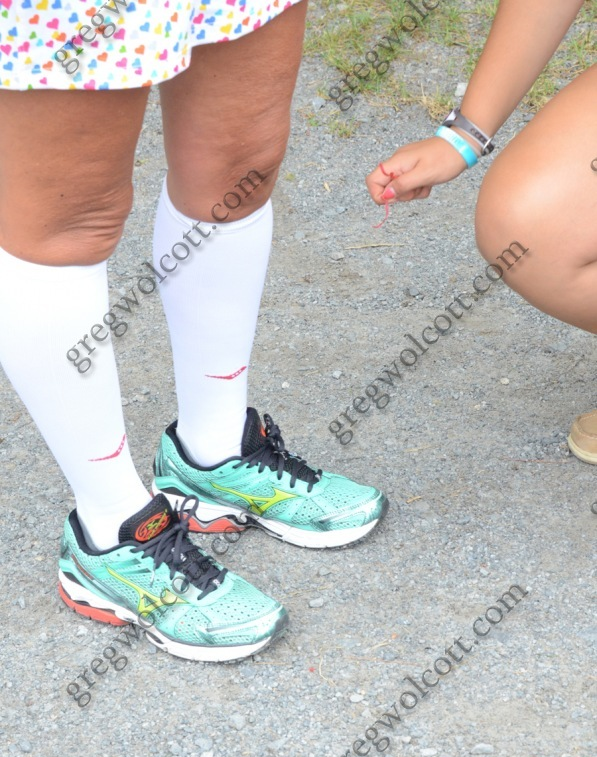
Then I switched to Mizunos.
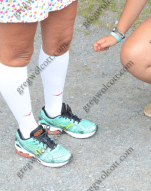
I even tried Reeboks.

Of course, I also bought Brooks several times.

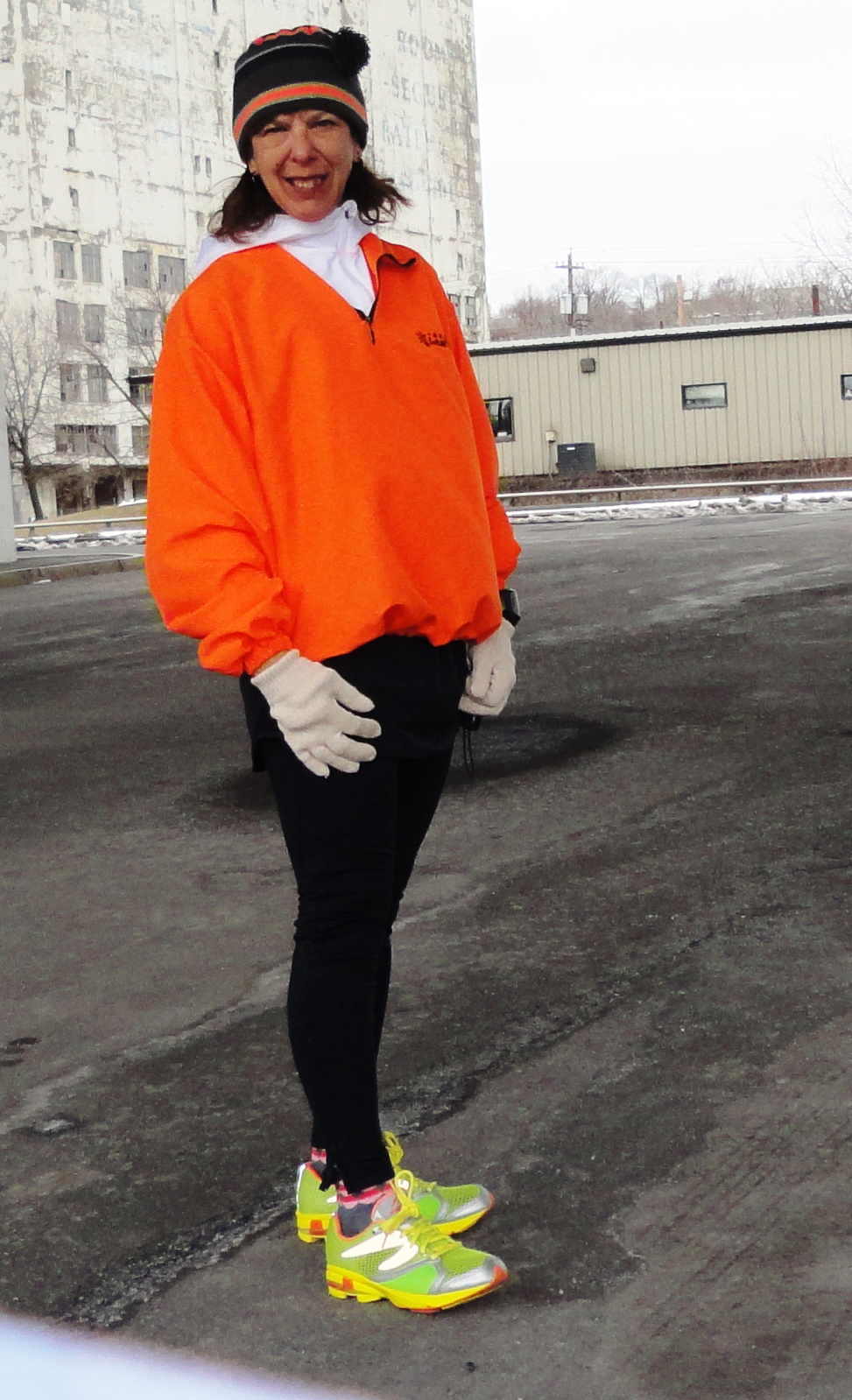
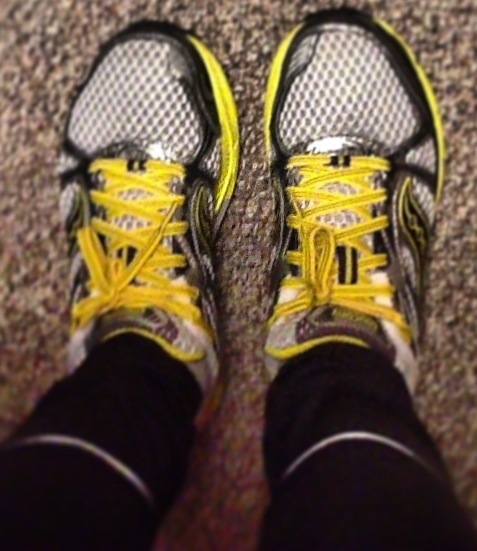
Now the latest choice of kicks is Newtons.
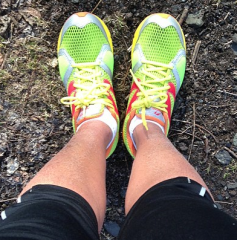
Still haven’t run in Hokas… (Give it time…)
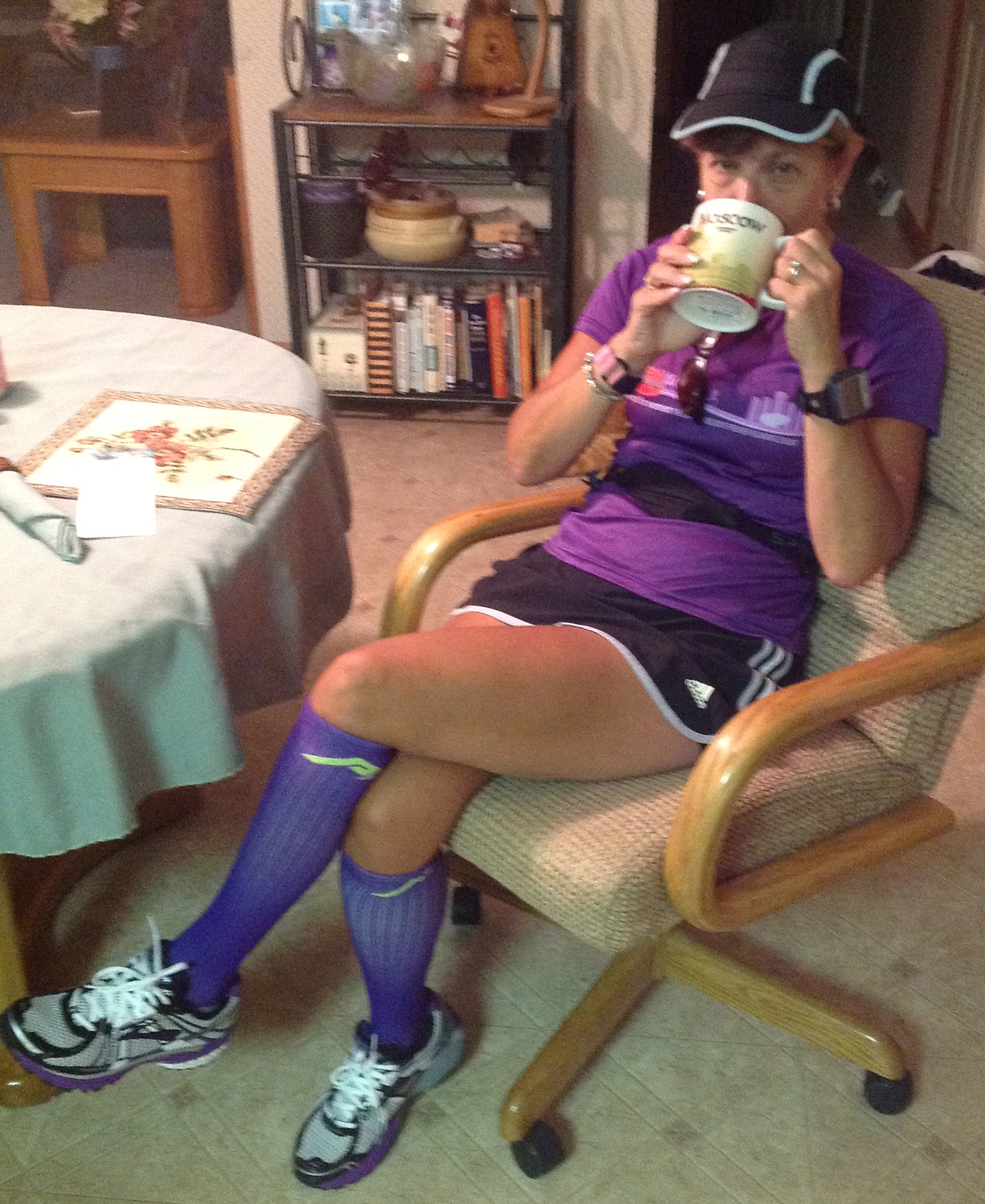
But seriously, the proper shoes are the most important part of your running gear!
When I first started running, I went to FleetFeet, a local store which specializes in running shoes. They watched me run and analyzed my stride, etc and then recommended several shoes. I picked the one that I liked the most (either by comfort or color). I would say that I have bought most of my shoes there. (Some I have bought on sale elsewhere.) After running awhile or after an injury, your feet do change. It is good to not buy the same shoes every time but to try different ones. Unfortunately, sometimes a shoe you love is no longer available and the newer model isn’t right for you. It is important NOT to run in worn out shoes. It is not just the sole but the cushioning that wears out. Some say replace after 400 miles but it is an individual thing. It depends on how heavy you are on your feet (I drag!!) and what surfaces you run on. Obviously, running indoors does not wear your shoes out as fast as running outside on a trail.
Tips for buying running shoes:
- For your first shoes, go to a store that specializes in running shoes. They will watch you run to determine if you underpronate or overpronate. They will examine your feet to determine if you have high arches or flat feet.
- Allow a thumbnail’s length of space in the toebox to allow for normal swelling and running downhill (If you have bunions, chose a shoe with a wide toebox)
- Try on shoes at the end of the day when your feet are their largest. You will usually wear a larger size running shoe than a regular shoe (I wear a 7 shoe & 8.5 running shoe.)
- If you wear orthotics, bring them when you try on running shoes.
- If you need more stability, buy a custom insole such as SuperFeet.
- If you have chosen a different type of running shoe, break them in slowly. (Don’t run a race in new shoes.)
- Replace your shoes when you need to. Some people alternate two different pairs to preserve their favorites.
Happy Running! What running kicks do you like? And why?

42.590990
-73.831099


























 My First 5K and More...